
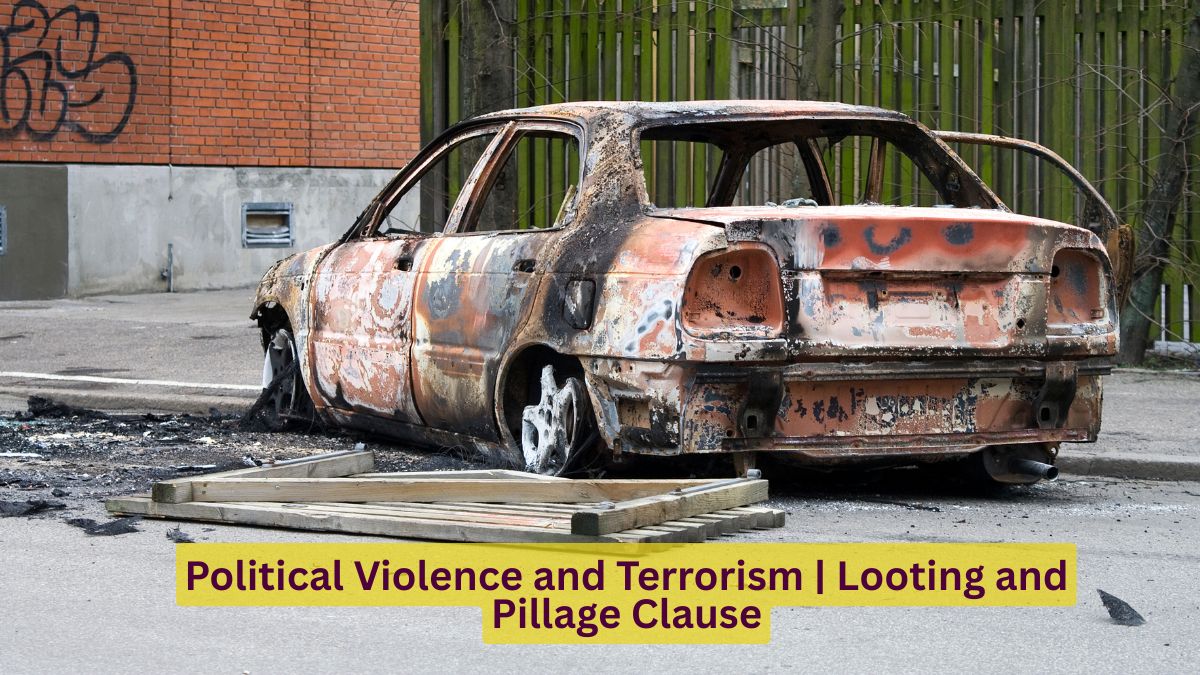
In periods of civil unrest, political instability, or social disruption, losses do not always arise from structured and traditionally insured perils such as fire or flood. In many cases, the damage comes from opportunistic human behavior — looting, pillage, and widespread theft.
These situations introduce complexity into insurance claims, because the cause of loss is not always clear-cut. This is where the Looting and Pillage Clause becomes critical.
What Is a Looting and Pillage Clause?
A Looting and Pillage Clause is a provision within an insurance policy that defines whether losses arising from theft, plundering, or looting during unrest are covered or excluded.
It clarifies:
- Whether theft during chaotic events is insured
- Whether such acts fall under riot, malicious damage, or theft
- The conditions under which claims will be accepted or declined
In practical terms, this clause determines whether an insured is compensated for losses during unrest — or left exposed.
What Constitutes Looting and Pillage?
Looting and pillage generally refer to acts such as:
- Theft of goods during riots or protests
- Breaking into premises and stealing inventory
- Organized or spontaneous plundering during civil disorder
- Combined damage and theft (for example, vandalism followed by theft)
The classification of these acts is critical because insurance policies respond differently depending on how the loss is categorized.
How the Clause Works in Practice
When a loss occurs, insurers assess several key factors:
- Cause of loss: Was it riot-related, malicious damage, or pure theft?
- Policy wording: Does the policy include riot cover or exclude theft?
- Conditions: Was there forcible and violent entry?
- Circumstances: Was the loss directly linked to civil unrest?
The outcome of the claim depends heavily on how the event is interpreted under policy terms.
Key Distinction: Riot vs Theft
One of the most common areas of misunderstanding is the distinction between riot-related loss and theft.
Looting can occur within an insured peril or as a separate excluded event:
- If linked to an insured peril such as riot — the loss may be covered
- If classified as pure theft — the loss is often excluded
Insurance responds based on the cause of loss, not simply the fact that goods were stolen.
Practical Examples
Example 1: Riot with Forced Entry
During political protests, a crowd breaks into a retail store, smashing windows and stealing goods.
Result:
- Riot cover applies
- Forcible entry is established
- Claim is likely payable
Outcome: Covered, as the looting is directly linked to an insured peril.
Example 2: Opportunistic Theft During Curfew
A warehouse is looted overnight during unrest, but there is no evidence of forced entry.
Result:
- Loss is classified as theft
- No forcible entry
- Claim is declined
Outcome: Uninsured due to policy conditions.
Example 3: Widespread Civil Disorder
Multiple stores in a shopping mall are looted during nationwide unrest.
Result depends on policy wording:
- If riot extension includes looting — claim may be covered
- If theft exclusion applies — claim may be declined
Outcome: Highly dependent on policy structure and wording.
Why Insurers Treat Looting Carefully
From an underwriting perspective, looting presents several challenges:
- High-frequency and unpredictable losses
- Accumulation risk across multiple insured locations
- Difficulty distinguishing organized vs opportunistic acts
As a result, insurers often:
- Require forcible and violent entry
- Separate riot damage from theft losses
- Apply exclusions or sub-limits
- Offer extensions for broader coverage
Why This Clause Matters Today
In today’s environment, civil unrest is becoming more frequent, and economic pressures can increase the likelihood of opportunistic crime.
Businesses operating in urban or politically sensitive regions face heightened exposure, making clarity around looting coverage essential.
Want to Fully Understand Insurance Clauses?
The Clauses Ebook provides a structured, practical breakdown of real insurance wording, claims interpretation, and underwriting insights.
Get the Full Clauses GuideKey Takeaways
- Looting and pillage coverage depends on how the loss is classified.
- Riot-related losses may be covered, while pure theft is often excluded.
- Policy wording and conditions determine claim outcomes.
- Understanding cause of loss is critical in claims assessment.
- This clause is essential in politically volatile environments.