
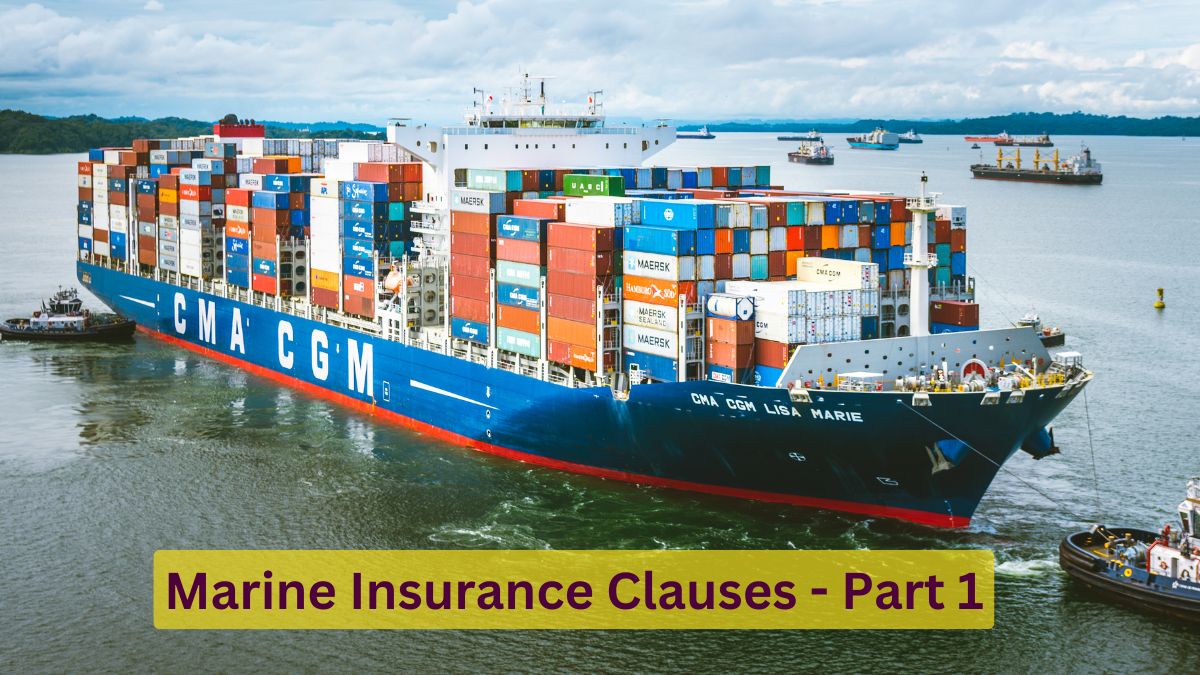
Marine insurance is often misunderstood as a simple form of cargo protection — typically reduced to selecting between ICC (A), (B), or (C). In practice, however, marine insurance is a highly technical, clause-driven contract.
The outcome of a marine claim rarely depends on whether damage occurred. Instead, it depends on which clause applies, what peril caused the loss, and whether any exclusions override the cover.
Understanding the key clauses within a marine policy is therefore essential for brokers, underwriters, logistics professionals, and cargo owners.
1. Institute Cargo Clauses (A), (B), (C)
The Institute Cargo Clauses (ICC) define the scope of coverage and are the foundation of most marine cargo policies.
- ICC (A): “All risks” cover (widest protection, subject to exclusions)
- ICC (B): Named perils cover (moderate protection)
- ICC (C): Basic named perils (limited protection)
A common misconception is that ICC (C) covers theft, pilferage, or handling damage. In reality, it only responds to a narrow set of specified perils such as fire, collision, or vessel grounding.
This misunderstanding is a frequent source of claim disputes.
2. Warehouse-to-Warehouse Clause
The Warehouse-to-Warehouse Clause extends coverage beyond ocean transit to include the full journey:
- From the seller’s warehouse
- During transit (including multimodal transport)
- To the buyer’s final warehouse
Without this clause, coverage may terminate once cargo is discharged at the port of destination.
In modern supply chains involving road, rail, and sea transport, this clause is essential.
3. War & Strikes Clauses
Standard ICC clauses exclude war-related and strike-related risks.
Unless separately added, the policy may not cover:
- War and civil war
- Civil commotion and riots
- Terrorism (in certain cases)
This gap becomes particularly significant when shipping through politically unstable regions or conflict zones.
4. General Average Clause
General Average is a long-standing maritime principle where all parties in a voyage share losses incurred voluntarily to save the vessel and cargo.
For example, cargo may be intentionally jettisoned during a storm to stabilize a vessel.
In such cases:
- All cargo owners must contribute proportionately to the loss
Marine insurance covers the insured’s contribution. Without insurance, cargo owners may be required to pay this amount before their goods are released.
5. Sue and Labour Clause
The Sue and Labour Clause places a duty on the insured to take reasonable steps to minimize or prevent further loss.
This may include:
- Moving damaged cargo to safe storage
- Protecting goods from further exposure
- Arranging emergency measures to limit damage
Failure to act reasonably can reduce or affect the claim outcome.
6. Inherent Vice & Insufficiency of Packing
These are among the most common grounds for claim rejection in marine insurance.
Marine policies generally exclude:
- Inherent vice (natural characteristics of goods causing deterioration)
- Insufficient or improper packing
For a claim to be valid, damage must result from an insured external peril, not from the internal nature of the goods or inadequate preparation for transit.
Why Marine Insurance Is Clause-Driven
Unlike some other insurance classes, marine insurance is highly dependent on detailed wording. Two policies with similar premiums can produce completely different claim outcomes depending on the clauses attached.
This makes clause interpretation a core skill in marine underwriting and claims handling.
Key Takeaways
- Marine insurance coverage is determined by clauses, not just policy type.
- ICC (A), (B), and (C) define different levels of risk protection.
- Key clauses such as warehouse-to-warehouse and general average significantly affect claims.
- Exclusions like inherent vice and poor packing are common reasons for claim rejection.
- Understanding clauses is essential for accurate placement and claim success.