
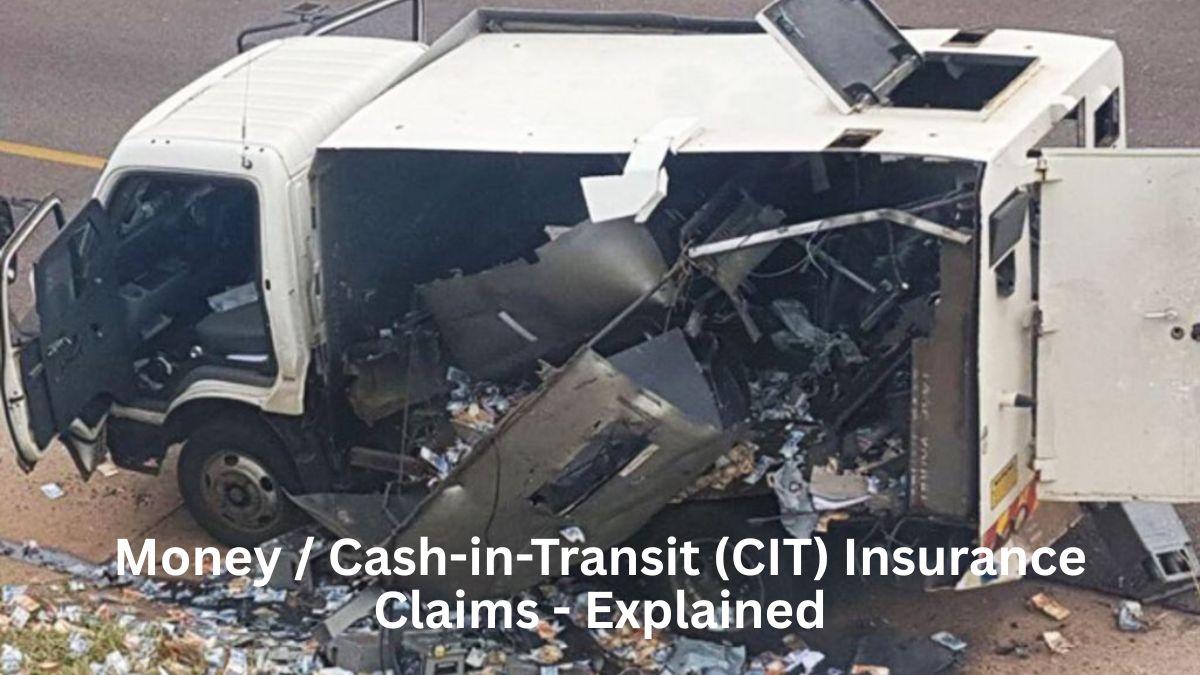
For organizations that routinely handle cash—daily banking, payroll distribution, collections, or business deposits—the risk of loss is very real.
Theft, robbery, or even misplacement can create immediate and material financial strain. This is where Money and Cash-in-Transit (CIT) Insurance becomes critical.
Below is a clear, step-by-step explanation of how a Money Insurance claim is lodged, assessed, and settled—from the moment of loss to final payment.
1. What a Money Insurance Claim Covers
Money Insurance responds to losses arising from insured events, subject to policy terms, conditions, and sub-limits.
- Cash lost while in transit
- Money stolen from business premises during office hours
- Money stolen from locked safes outside working hours
- Losses arising from robbery or hold-ups
- Loss of bank slips or other cash equivalents
Settlement is subject to declared policy sub-limits such as cash-in-transit limits, cash-in-safe limits, and petty cash limits.
2. Immediate Notification to the Insurer
As soon as a loss occurs, the insured must notify the insurer without delay—whether the loss arises from theft, robbery, disappearance, or loss during transfer.
Notification may be done via email, online portal, phone call, or through an insurance broker. Key details typically include:
- Policy number
- Date and time of loss
- Location of the incident
- Estimated amount involved
3. Secure the Scene and Report to the Police
All Money and CIT claims require police involvement. The insured must report the incident to the nearest police station and obtain a police abstract.
Official statements and police documentation establish the factual basis of the claim.
4. Documentation Submission
Commonly required documents include:
- Police abstract
- Loss declaration detailing circumstances and amount
- Statements from affected employees or escorts
- Internal investigation report
- Bank slips, deposit records, or withdrawal confirmations
- Daily cash reconciliation records
- Evidence of safe integrity or key changes
- Proof of security escort where required
For transit losses, insurers may also request security contracts, guard assignment records, and vehicle movement registers to confirm compliance with policy conditions.
5. Claim Verification and Investigation
Insurers assess declared limits, adherence to security procedures, accuracy of cash declarations, and whether negligence contributed to the loss.
Interviews may be conducted with drivers, cashiers, accountants, guards, or other relevant staff.
6. Claim Settlement
Once liability is established, the insurer will either pay the verified loss, settle up to the applicable policy limit, or decline the claim where material conditions were breached.
Payments are made directly to the insured entity.
Key Takeaways
- Immediate notification and police reporting are essential.
- Complete documentation speeds up claim settlement.
- Strict adherence to security conditions protects coverage.