
Marine insurance is often associated with cargo protection and physical damage to vessels. However, one of the most significant exposures in marine operations is not just damage to the vessel itself — but liability arising from how the vessel operates at sea.
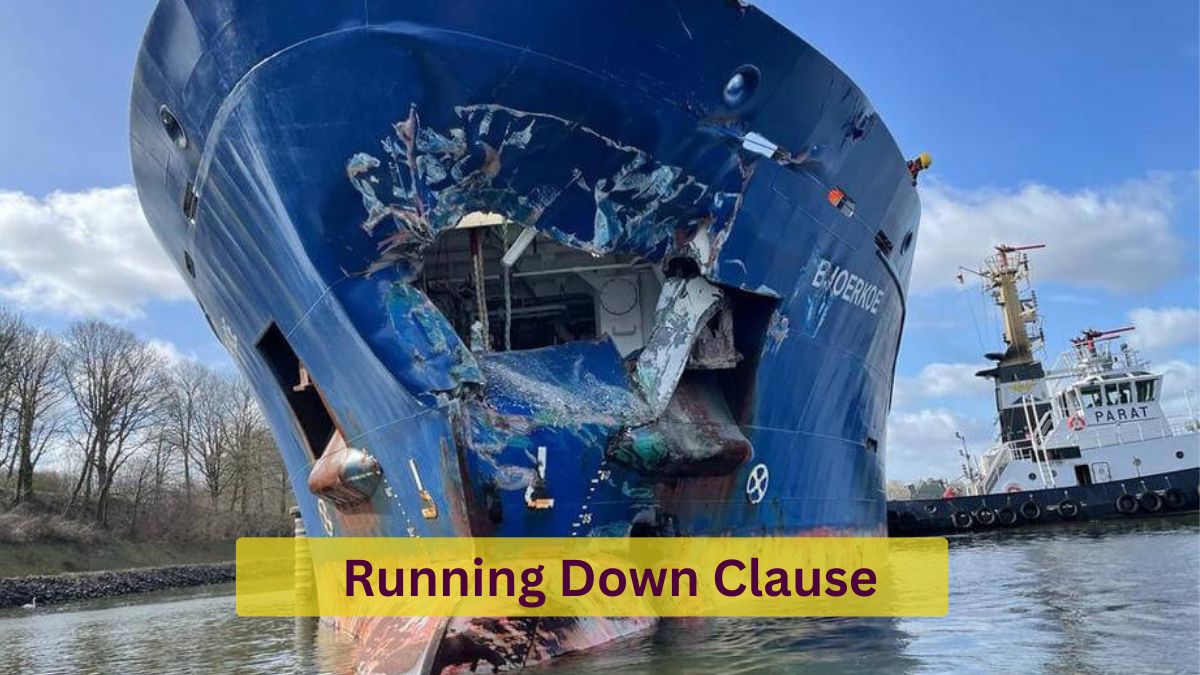
Collisions between vessels can result in substantial financial consequences, including repair costs, loss of use, and third-party liability claims. This is where the Running Down Clause (RDC) becomes a critical component of marine hull insurance.
What Is the Running Down Clause?
The Running Down Clause provides cover for the insured vessel’s liability for damage caused to another vessel in the event of a collision.
In simple terms, it is a collision liability cover embedded within marine hull policies.
While hull insurance primarily protects the insured vessel against physical damage, the Running Down Clause extends this protection to include liability toward third parties — specifically, other vessels involved in a collision.
How the Running Down Clause Works
When a collision occurs, liability is typically determined based on fault. If the insured vessel is found legally liable, the Running Down Clause may respond to cover that liability.
Coverage usually operates as follows:
- The insurer covers the insured vessel’s share of liability for damage to the other vessel
- The cover is often expressed as a proportion (commonly 3/4th collision liability)
- The remaining portion is typically handled under Protection & Indemnity (P&I) insurance
This split structure reflects how marine risks are traditionally shared between hull and P&I covers.
Example 1: Standard Vessel Collision
An insured cargo vessel collides with another ship due to navigational error. The collision causes significant structural damage to the other vessel.
Following investigation, the insured vessel is found to be 100% at fault.
✔ The Running Down Clause may cover a portion (e.g. 3/4th) of the liability for damage to the other vessel ✔ The remaining liability may be covered under the vessel’s P&I policy
Example 2: Shared Fault Collision
Two vessels collide in restricted waters, with both parties contributing to the incident. Liability is apportioned at 60% to the insured vessel and 40% to the other vessel.
✔ The Running Down Clause applies only to the insured vessel’s 60% share of liability ✔ Within that share, the clause may cover up to the specified proportion (e.g. 3/4th), with the balance handled by P&I
Key Principle: Liability Arising from Vessel Operations
A critical principle in marine insurance is that risk is not limited to physical damage.
Vessel operations can give rise to third-party liabilities, particularly in navigational environments where collisions are possible. The Running Down Clause ensures that hull insurance responds not only to damage to the insured vessel, but also to its legal responsibility toward others.
Why the Running Down Clause Matters
Marine collisions can result in extremely high liability exposures, especially when large commercial vessels are involved. Repair costs, delays, and associated financial losses can quickly escalate.
Without the Running Down Clause, hull insurance would only cover damage to the insured vessel itself, leaving a significant gap in liability protection.
The clause therefore plays a vital role in bridging hull coverage with broader liability protection, working alongside P&I insurance to provide a more complete risk solution.
Want to Fully Understand Insurance Clauses?
This article is just one part. The Clauses Ebook breaks down real-world insurance wording, claims interpretation, and practical applications — step by step.
Get the Full Clauses GuideKey Takeaways
- The Running Down Clause covers collision liability toward other vessels.
- It forms part of marine hull insurance, not standalone liability cover.
- Coverage is typically partial (e.g. 3/4th), with the remainder handled by P&I insurance.
- It addresses third-party liability arising from vessel operations.
- Understanding RDC is critical in assessing marine collision claims.